

Online newspaper based in Matera
EcocNews is registered at the Court of Matera in the press register n. 2/2021
Editor in chief: Mariateresa Cascino. Founder and editorial director: Serafino Paternoster
via San Francesco, 1 - 75100 Matera (Italy)



After Matera 2019, Italy will once again be called upon in 2033 to designate the European Capital of Culture, which will share the title with one of the Dutch cities. These will be the last capitals selected under the current cycle’s rules. Starting in 2034, a new cycle will begin based on the updated regulations proposed by the European Commission, which are expected to be evaluated by the European Parliament and the Council of Europe around mid 2027.
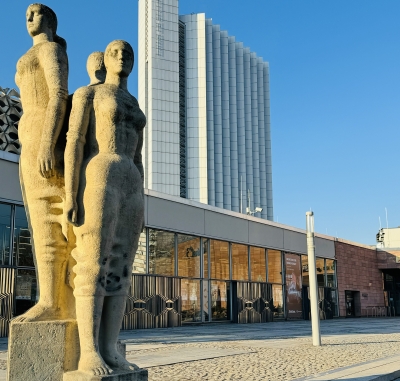
Chemnitz, the European Capital of Culture 2025, has reached around 3.5 million people, thereby significantly exceeding its original target of two million visitors.
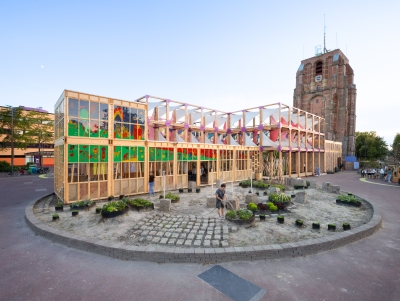
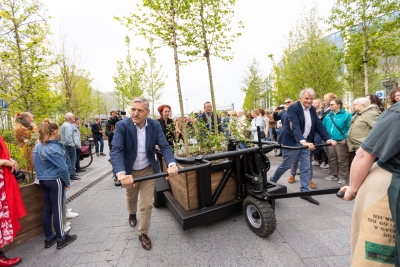
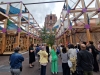
Bouwurk has been nominated for a Dezeen Award in the Installation Design category. Bouwurk is the temporary community house, or mienskipshûs, that Arcadia and the Municipality of Leeuwarden built at the foot of the Oldehove tower in Leeuwarden in the summer of 2025. It was designed by Overtreders W. Besides the jury award, Bouwurk is also competing for the public vote, which is open until 16 October.
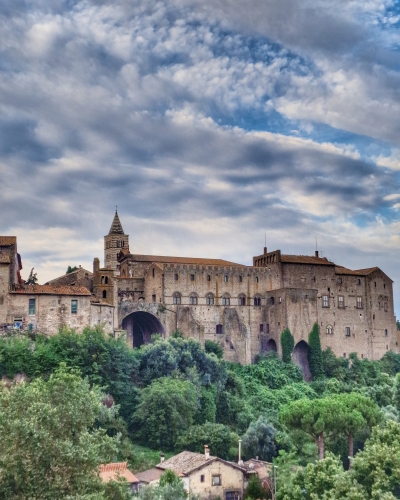
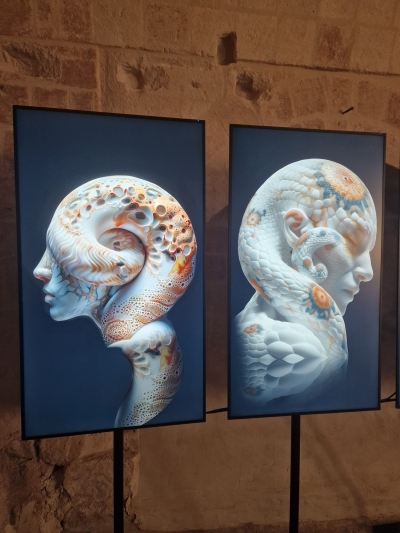
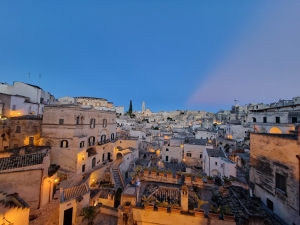
Seven years after its year as European Capital of Culture, and when Matera is Mediterranean Capital of Culture and dialogue for 2026, the city of the Sassi asks what it means to be Mediterranean without a coastline. The answer comes from nine artists, four museums and a walk across the old town – until 8 December 2026.
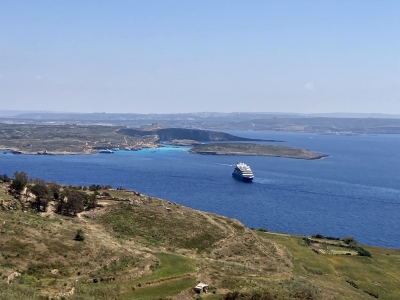
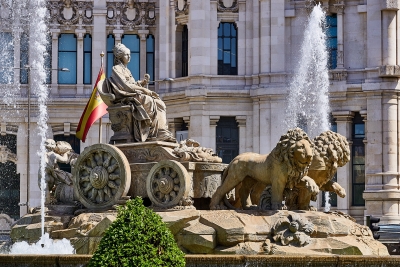
In 2031, Spain and Malta will each host the European Capital of Culture. The decision for Spain will be made on 3 December. The panel will have to choose from four cities: Cáceres, Granada, Las Palmas de Gran Canaria and Oviedo. As for Malta, the panel made its decision in recent days. The choice was not entirely a foregone conclusion, even though only one city had made it short-listed. Victoria–Gozo has been designated as the European Capital of Culture 2031.
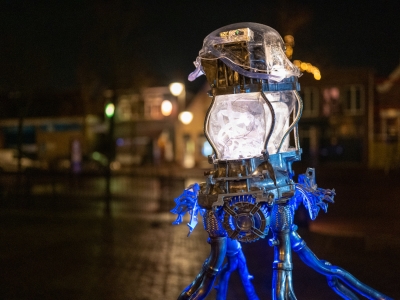
This year, R.o.R becomes R.o.R+ and moves to Vila Vipolže in the Brda region for the first time. The festival of contemporary art and intermedia practices is entering a new phase of development.
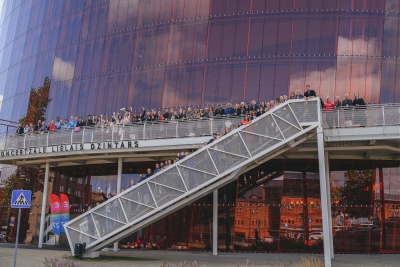
From 9 to 12 September, Liepāja hosted the international European Capitals of Culture network meeting “ECoC Family Meeting 2026”, bringing together 87 participants from 22 countries. The event was jointly organised by the two upcoming European Capitals of Culture for 2027 — Liepāja and the Portuguese city of Évora.
As is well known, in 2031 it will be Spain and Malta's turn to host the European Capital of Culture. While in Malta the outcome is virtually decided — only one city, Victoria-Gozo, made the shortlist, and it is highly unlikely, though technically possible under the rules, that the title won't go to it — in Spain the race remains wide open between four cities: Cáceres, Granada, Las Palmas de Gran Canaria and Oviedo.
What remains of a Capital of Culture once the spotlight fades? That is the question running through the *study by Madoka Sugawara, Tomoyuki Mashiko and Susumu Kawahara on Leeuwarden-Friesland, the Dutch city that held the title of European Capital of Culture in 2018.
In 2025, Slovenia was one of two European countries to host a European Capital of Culture, alongside Germany’s Chemnitz. Nova Gorica was awarded the title, which it shared with the Italian city of Gorizia: a symbolic and powerful choice, as the entire cultural programme was built around the idea of overcoming the border that had divided the two cities for decades. An urban, physical and mental border, transformed into fertile ground for projects capable of fostering dialogue between artists, communities and creatives from both countries.
Nova Gorica and Gorizia are still all dressed up, as elegant as ever, but in a shade somewhere between green and turquoise that is still clearly visible on the branded buses, in shop windows and on information pillars.
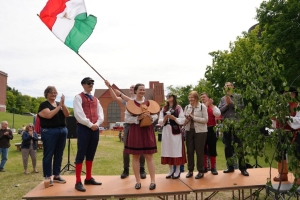
In the heart of Michigan’s Copper Country, the word “Finno‑Ugric” has suddenly taken center stage. It is a term that brings together distant peoples — Finns, Karelians, Sámi, Estonians, Hungarians, Khanty, Mansi and many others — united by languages and traditions that stretch across Northern Europe and Siberia. According to Dr. Natalia Abrosimova of Tallinn University, around 25 million people speak a Finno‑Ugric language: a vast, resilient and surprisingly cohesive cultural constellation.
Following the successful launch of the Mediterranean Capitals of Culture and Dialogue initiative in Alexandria and Tirana in 2025, Matera (Italy) and Tétouan (Morocco) have been designated as the Mediterranean Capitals of Culture and Dialogue for 2026.
Deputy Mayor Vimini and Councillor Ottaviani were provided by the representatives with the timeframe within which to take the next steps, which will be: to consolidate the joint initiative between Pesaro and Urbino, to strengthen the province’s involvement, to expand the network within the Marche region and across regions, and to prepare in advance for the 2027 event
EcocNews is delighted to feature an article today by Beatriz Garcia, one of the leading experts on European Capitals of Culture. It has been 40 years since this European programme began. In this article, Beatriz Garcia helps us to better understand what has happened over the years, particularly in terms of the connections and challenges centred on culture and cities. Starting with the Ecoc family and Culture Next of which EcocNews is an official media partner.
EcocNews is pleased to feature Sylvia Ammann’s article on a specific study of the legacy left by a European Capital of Culture.
Arcadia has appointed Muriël Besemer as the Artistic Director of Arcadia 2028. Besemer is a theatre maker, educator and cultural programmer who has worked with young people for more than thirty years. In the coming years, she will work alongside the Arcadia team to develop the programme for Arcadia 2028, in which young people will play a central role.
At the Culture Next conference held in Larnaca, Alma Salem’s presentation attracted considerable interest, owing to the depth of her thinking, the breadth of her narrative, and the relevance of her observations on the Mediterranean and the role of culture in resolving the conflicts currently ravaging the Middle East and the Mediterranean.
Online newspaper based in Matera
EcocNews is registered at the Court of Matera in the press register n. 2/2021
Editor in chief: Mariateresa Cascino. Founder and editorial director: Serafino Paternoster
via San Francesco, 1 - 75100 Matera (Italy)